
Long read | Was this the most c(r)ooked World Cup?
How a Swiss non-profit staged the most lucrative World Cup ever and made everyone else pay for it.

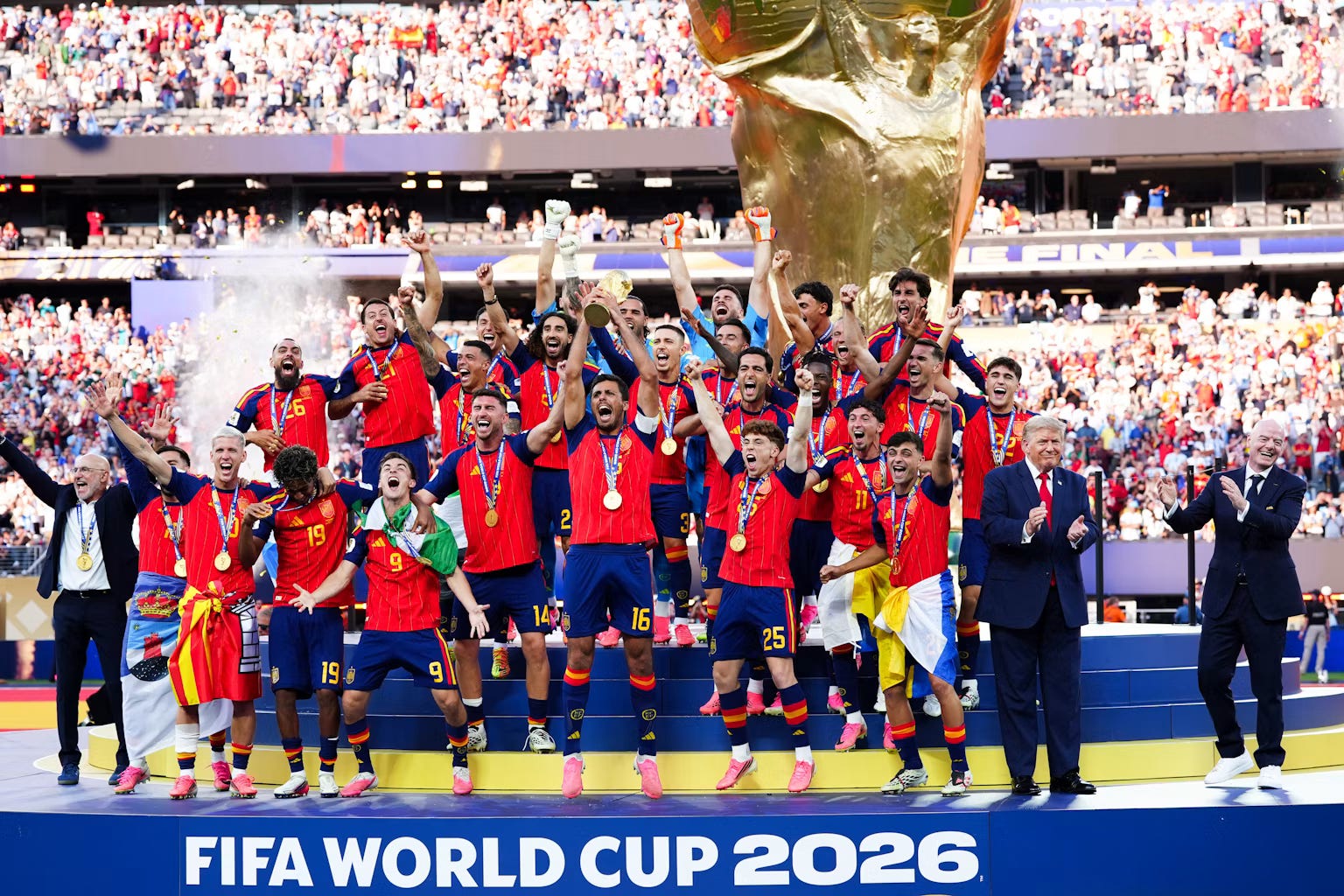
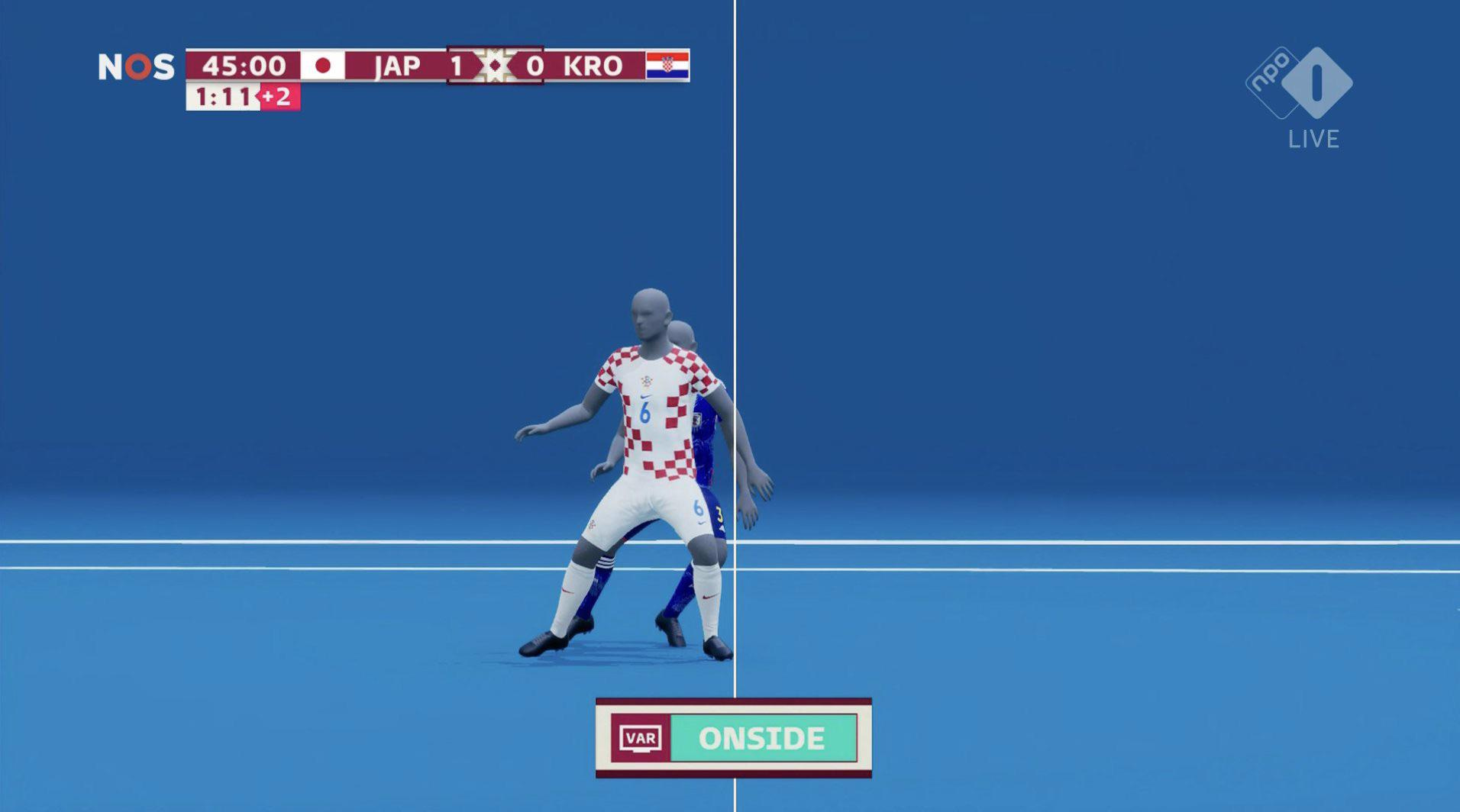
For the past month, my alarm went off somewhere between 1 and 5 AM so I could watch grown adults on the other side of the planet lose their minds over a VAR line drawn through someone’s armpit.
I’ve learned two things. One, semi-automated offside technology has done nothing for anyone’s blood pressure, and two, sleep deprivation in your late thirties compounds like credit card debt.
But it’s over now. Spain won their second star, Lamine Yamal knelt to pray at the final whistle while Leandro Paredes opened his summer boxing camp behind him, Messi walked off a World Cup pitch for what’s probably the last time, and the Muppets performed at a World Cup final. That last sentence is real, and we’ll get to it.
The trophy went to Rodri via a president who spent months trying to kick Spain out of NATO and then refused to leave their team photo. Nothing heals transatlantic relations like proximity to an 18-karat photo op.
Curtain down.
The reviews are in! Infantino called it “the greatest human, social and cultural event that mankind has ever witnessed. He used similar words in Russia and sillier words in Qatar, so grade the superlative accordingly.
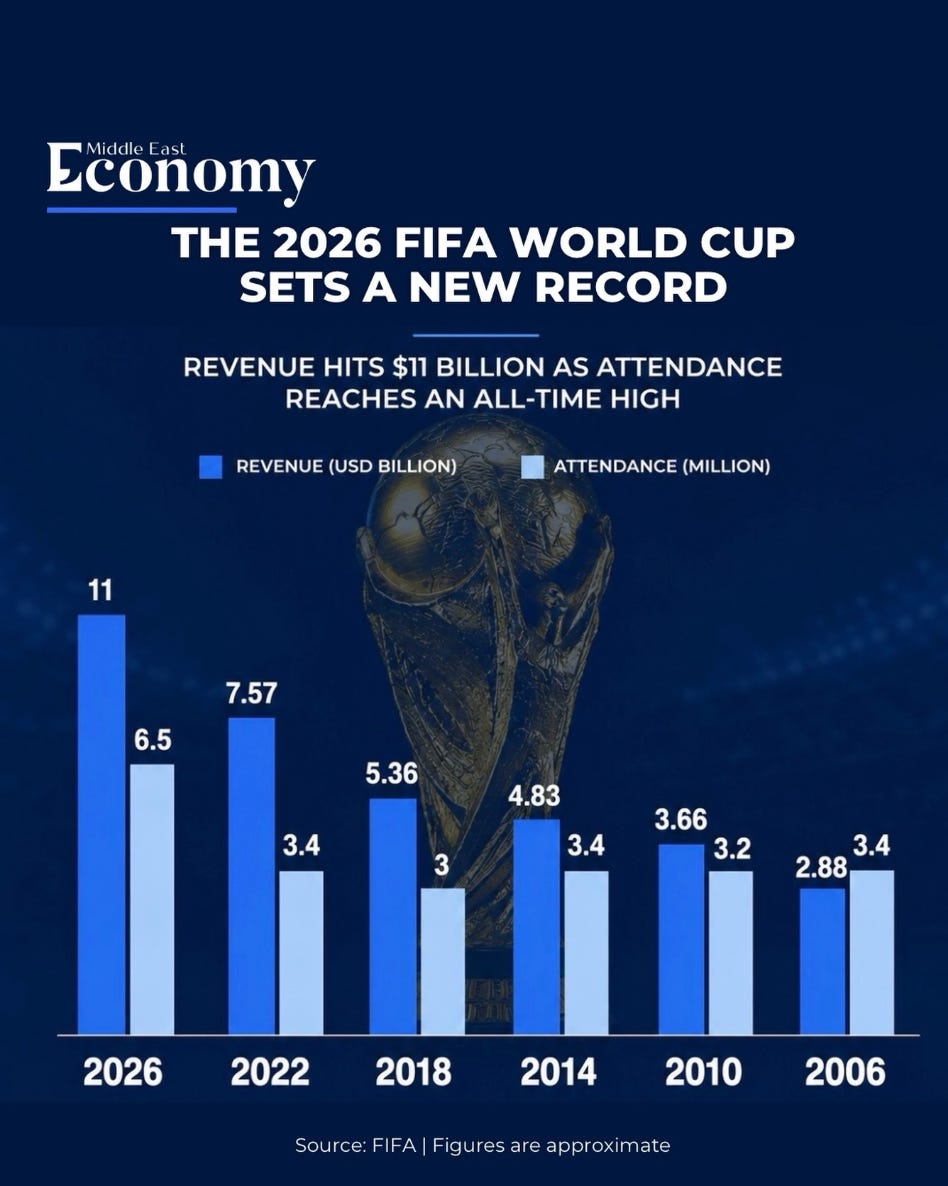
On one metric, though, he’s right. FIFA cleared roughly $11 billion this cycle, about 50% more than Qatar, helped along by airline-style dynamic pricing and around half a billion ticket requests for seven million seats.
Financially, this was the best World Cup ever staged, and it was always going to be, because 48 teams and 104 matches guarantee it by arithmetic alone.
Everything else deserves a bit of a discussion, am I right? We love repeating that sports and politics shouldn’t mix, and at the local derby level, sure. At $11 billion, though, the sentence becomes a bit redundant.
Hosting a World Cup is six weeks of saturation coverage on every continent, which is why countries keep bidding on a tournament that historically loses them money.
Germany bought itself a rebrand in 2006. Qatar bought a seat at the geopolitical table in 2022. What FIFA sells is perception, and there was, is, and always will be a line of buyers for that.
The 2026 version didn’t pretend otherwise. In December, FIFA invented a Peace Prize and handed it to the sitting president of its host country. The politics came with a price tag attached.
By June, that same country had turned away a Somali referee FIFA selected itself, valid visa and all, and Iran’s squad was commuting in from Mexico because they weren’t allowed to stay between matches. Plenty of fans with tickets and hotel bookings never made it past the visa stage at all. That’s, by every definition, politics mixing with sports.
You could argue FIFA didn’t choose most of that; visa policy sits with governments, decisions tied to geopolitics do too. The halftime show, though, was entirely self-inflicted. Which, as promised, brings me back to the Muppets.
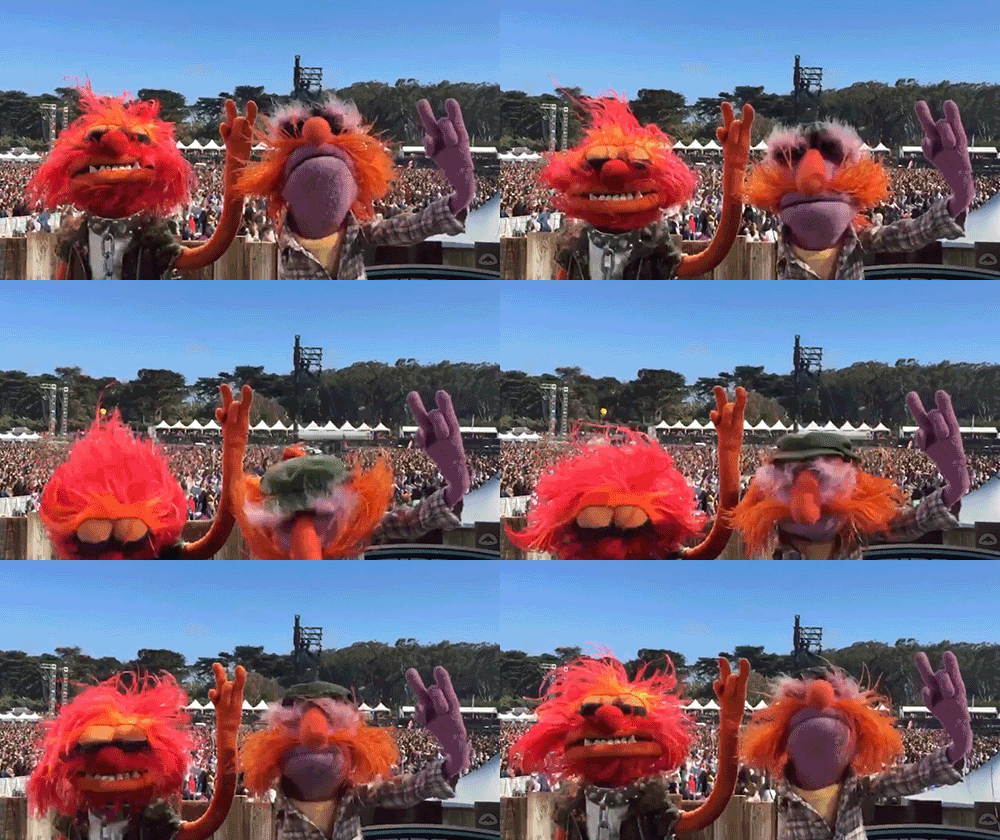
For the first time in its history, Infantino and company ripped a page out of the NFL playbook with its own 27-minute crescendo that featured anyone from Shakira & Justin Bieber to Ted Lasso, Ronaldinho and a singing frog.
What nobody in Zurich seems to have understood is that the Super Bowl halftime works because American football is a television production with a game attached. The sport pauses every few seconds, the broadcast is built around those pauses, and a healthy share of the audience shows up for the show and the ads in the first place.
Football spent a century doing exactly the opposite: 45 uninterrupted minutes, twice. Instead, the two best teams on the planet went cold in a tunnel for half an hour of a World Cup final so Kermit could get his verse in.
What Zurich does understand, though, even when the halftime show looks straight off Temu, is how to sell the stage it stands on.
Broadcasting rights went for north of $5 billion. Sponsors paid anywhere from $15 to $200 million to put their logo somewhere near a football. Hospitality, which FIFA used to license out to a third party for a flat fee, got pulled in-house this cycle so the margin on every corporate suite and VIP package flows back to FIFA instead.
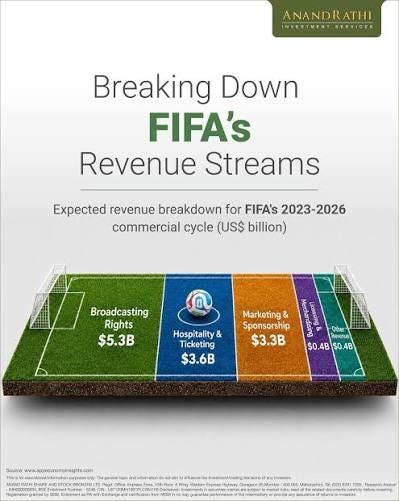
The halftime show exists for the same reason. 27 more sellable minutes in the most-watched broadcast on earth. It’s inventory no other sporting event on the planet can provide.
The hosts, meanwhile, pay for the privilege of providing it. Mexico granted FIFA a full national tax holiday before the circus unpacked. US host cities waived sales tax on every ticket and picked up security and logistics.
All of which sounds like a terrible deal until you remember it’s technically a donation, because the entity collecting the $11 billion is registered in Switzerland as a not-for-profit association. To put this into perspective, this is the same legal category as the local chess club.
Crooked or cooked? They ain’t mutually exclusive.
So why do countries keep lining up for a product that looks so lop-sided on paper?
Economists actually have a name for half the answer: the winner’s curse. When bidders compete for something whose real value can’t be measured, the one who overestimates the hardest wins, and hosting rights for a World Cup might be the least measurable asset in sports.
But the countries lining up aren’t naive, and the other half of the answer explains why they keep coming back.
Political scientists call it soft power, the ability to make other countries like you, trust you, and do business with you through attraction instead of pressure. It’s why Mexico’s push to become the first nation ever to host three World Cups and Morocco’s sixth bid to host the Cup in 2030 were both soft power plays, and six weeks of saturation coverage remains a darn good way to buy a slice of exactly that.
The financial return and the political return simply run on different clocks, and FIFA has mastered the art of getting paid on both.
But none of this will damage the tournament itself. The World Cup might be the only brand on earth its owner can’t ruin, because the equity was never the owner’s to begin with. It’s produced, free of charge, by players & fans, and FIFA does one hell of a job to license all of it out to broadcasters and sponsors for millions of dollars.
This arrangement survived Qatargate, survived a decade of indictments, and it survived this tournament too.
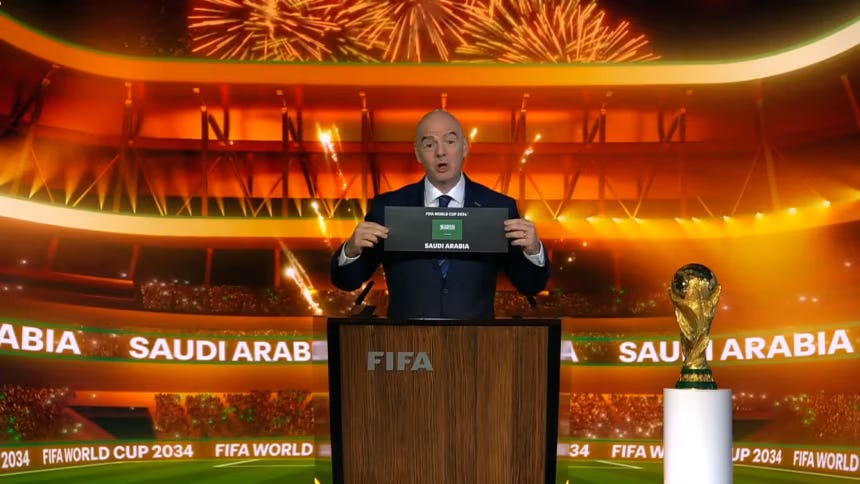
And if any of this bothers you, I have bad news for ya. The 2034 World Cup went to Saudi Arabia in a race with exactly one bidder. Perception, as ever, has a line of buyers.